
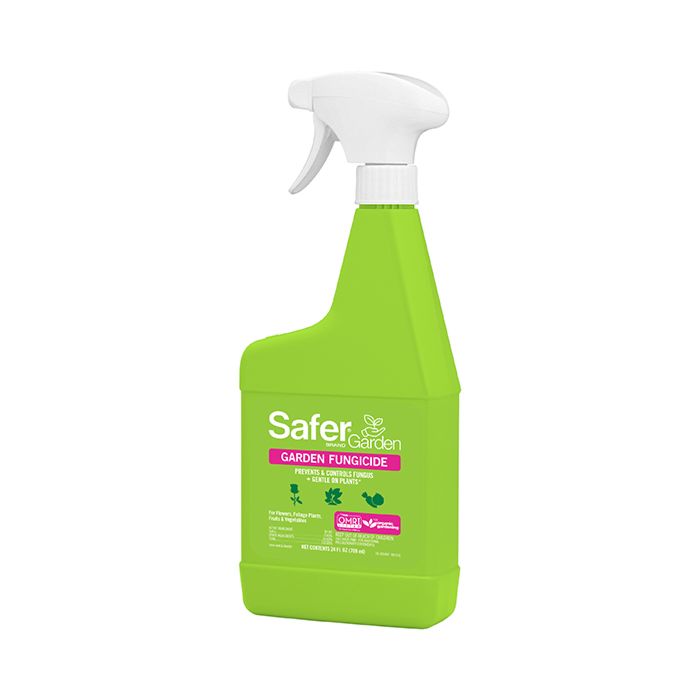
Safer® Garden Fungicide Spray - 24 oz
- Prevents & controls fungus + gentle on plants when used as directed
- Controls powdery mildew, black spot, leaf spot, and rust
- For use on roses, flowers, foliage plants, fruits & vegetables
- OMRI Listed® and compliant for use in organic gardening
- Can be used up until the day before harvest
- 24 fl oz ready-to-use spray bottle for easy application
CA, PR
Best Used For



Safer® Brand Garden Fungicide
Protect your plants from disease with Safer® Brand Garden Fungicide. This ready-to-use spray prevents and controls fungal diseases, including powdery mildew, black spot, leaf spot, and rust. Fungal diseases can quickly spread from one plant to another, wiping out an entire crop. This unique formulation is gentle on plants when used as directed and can be used until the day before harvest. It’s also OMRI Listed® for compliant use in organic gardening.
Controls & Prevents Fungus
Safer® Brand Garden Fungicide can be used to treat various fungal diseases including powdery mildew, black spot, leaf spot, and rust. Use it to protect your roses and flowers from unsightly black spot. Control rust on beautiful foliage plants and ornamentals. Keep vegetables and fruit, such as strawberries, tomatoes, and peppers, free from powdery mildew so they can continue to grow vibrant and delicious.
Gentle on Plants
Safer® Brand Garden Fungicide uses sulfur to create an environment that is not optimal for diseases to grow and spread, therefore stopping the attack on plants so they can continue to grow healthy and strong. The formula is gentle on plants when used as directed and can be used up until the day before harvest. It’s also OMRI Listed® so it’s compliant for use in organic gardening.
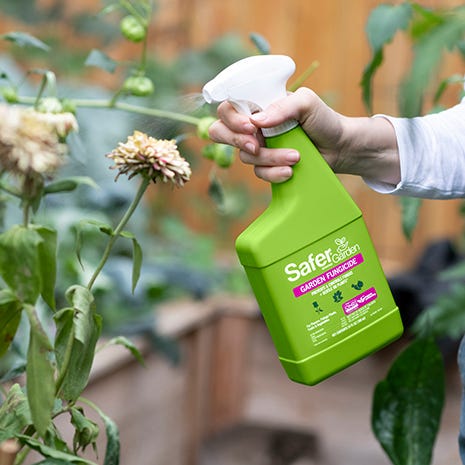
Easy to Use
For your convenience, the ready-to-use spray bottle makes application a breeze. Apply Safer® Brand Garden Fungicide at the first sign of disease, spraying plants thoroughly to saturate the upper and lower surfaces of the foliage. Reapply at regular intervals depending on your plant type, after rain, or as needed to control powdery mildew, leaf spot, black spot, and rust.
Safer® Brand Garden Fungicide Details
Do you want to know more helpful details about Safer® Brand Garden Fungicide? Take a closer look at the in-depth specifications for this product.
| Safer® Brand Garden Fungicide | |
|---|---|
| Model # | SG5450 |
| Size | 24 oz |
| Active Ingredients | Sulfur |
| Controls | Powdery mildew, black spot, leaf spot, and rust |
| Product Features |
|
| Safer® Brand Garden Fungicide | |
|---|---|
| Model # | SG5450 |
| Size | 24 oz | Active Ingredients | Sulfur |
| Controls | Various fungal diseases including:
|
| For Use On |
|
| Product Features |
|
Customer Reviews
Q&A

About Safer® Brand
Safer® Brand is the leader in alternative lawn and garden products, offering many solutions that are compliant with organic gardening standards. Safer® Brand recognizes this growing demand by consumers and offers a wide variety of products for lawns, gardens, landscapes, flowers, houseplants, insects and more!
About Safer® Brand »