

Cabbage loopers feed not only on cabbage, but also on a wide range of plants. Look for leaves with big, odd-shaped holes and heads of cabbage with pieces eaten out of the heads.
So... What's a Cabbage Looper?
The cabbage looper in the caterpillar (larvae) stage is a light green color and ranges between 1 1/2"-2" in length.
In the moth stage, these insects are grayish-brown in color and have silvery markings on the wings.
Reproduction Patterns of Cabbage Loopers
The cabbage looper exists in the pupal stage during the winter, its cocoon fastened to a plant. When it exits the cocoon in Spring, it flies to a nearby plant where it will lay hundreds of light green eggs on the plant's leaves. The eggs will hatch in anywhere between 3-10 days, depending on the temperature and climate of the region.
When the tiny caterpillars appear, they will go through several mini-stages called instars. These instars will take up to 4 weeks after which it will spin its cocoon for its pupal stage. Within two weeks, the adult cabbage looper moth will emerge from the cocoons, unless it will be spending the winter in the cocoon in the pupal stage.
Cabbage Looper's Habitat
The cabbage looper is found throughout the United States and the southern regions of Canada. In the adult stage, it is a moth that is nocturnal and can often be seen flying around outdoor lights.
In the caterpillar stage, it is found in gardens where it can cause quite a bit of damage to a variety of crops, most notably those of the cabbage family, as its name implies.
Symptoms of Cabbage Looper Damage
Cabbage loopers feed not only on cabbage, but also on a wide range of plants. Since they chew holes in the leaves and often attack the heads of cabbage and other crucifers, look for leaves with big, odd-shaped holes and heads of cabbage with pieces eaten out of the heads.
Results of Cabbage Looper Infestation
Cabbage loopers can cause significant crop damage if left unchecked. They can damage the heads of cabbage and cause destruction of other crops such as spinach, tomatoes, potatoes, beets, cotton and soybeans, to name a few.
These crops become inedible and unmarketable if they have been infested by the cabbage looper, resulting in cash losses to farmers. Home gardeners are also affected by not being able to enjoy the fruits of their labor.
Cabbage Looper Controls
What?
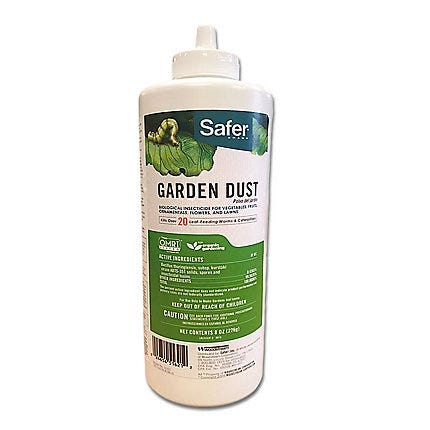
B.t. and pyrethrins are natural solutions that can be used to help control the cabbage looper. B.t. (Bacillus thuringiensis) is a good method of controlling the cabbage looper in your garden or field without environmental concerns or harm to wildlife and beneficial insects. Insecticides containing pyrethrins, such as Safer® Brand End ALL with Neem Oil, can be another method of combating the cabbage looper.
How?
B.t. kills cabbage loopers, thereby preventing further damage. When the worm ingests the B.t., it works as a gut rot poison that makes the worm stop feeding. The cabbage looper will stop feeding immediately and die within days of malnutrition.
B.t. usually comes in a dust (Safer® Brand Garden Dust) or concentrate (Safer® Brand Caterpillar Killer) and kills a variety of caterpillars and worms, including the destructive cabbage looper. It will not harm beneficial insects, children, pets or wildlife.
Carefully read and follow all directions on the product's label. It is recommended with any pesticide to test plants for sensitivity to the product. Spray a small section of the plant in an inconspicuous area and wait 24 hours before full coverage.
When?
B.t. is generally applied when it is a cooler time of day, preferably later in the afternoon or early in the evening since the product breaks down in sunlight and heat.
Safer® Brand offers a variety of cabbage looper control products to help control and eliminate this garden pest and revive your plants. Please check out our cabbage looper control products for more details about how they work and how, when, and where they should be applied.
When applying pyrethrins to infected plants, carefully read and follow all directions on the product labeling for proper application. Do not spray plants in the peak of the day or when temperatures exceed 90°F.
Natural Predators
What?
Predators of the cabbage looper include lady beetles, spiders, pirate bugs, wasps, birds and small mammals.
How?
The predators and parasites of cabbage loopers attack both larvae and eggs, killing them for food as well as paralyzing them and depositing eggs in the larva or egg. When the parasitic egg has hatched, it will feed on the cabbage looper larva or egg.
When?
The predators and parasites of cabbage loopers attack both larvae and eggs, but in some cases, they will also attack the cabbage looper in its pupal stage.
 Safer® Brand leads the alternative lawn and garden products industry, offering many solutions that are compliant with organic gardening standards. Safer® Brand recognizes this growing demand by consumers and offers a wide variety of products for lawns, gardens, landscapes, flowers, houseplants, insects and more!