
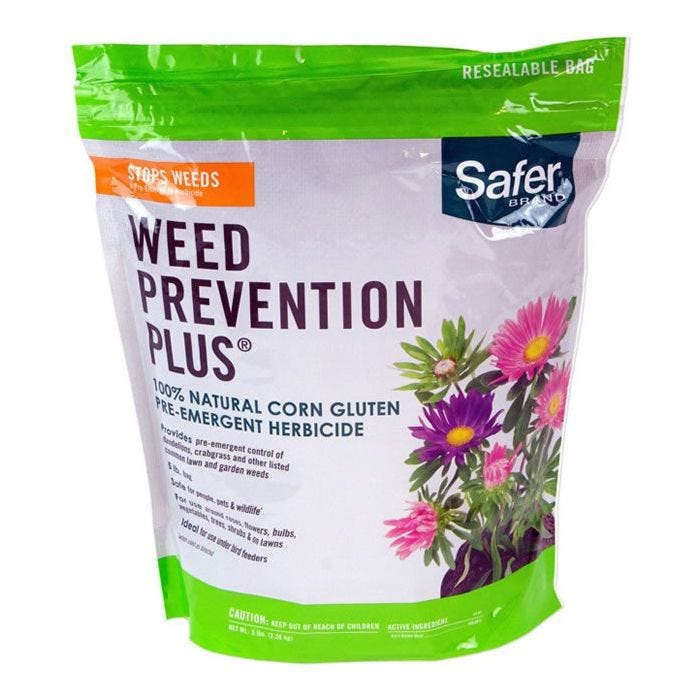
Safer® Brand Weed Prevention Plus®
- 5 lb bag
- Up to 90% effective weed control - 1st year on dandelions & crabgrass
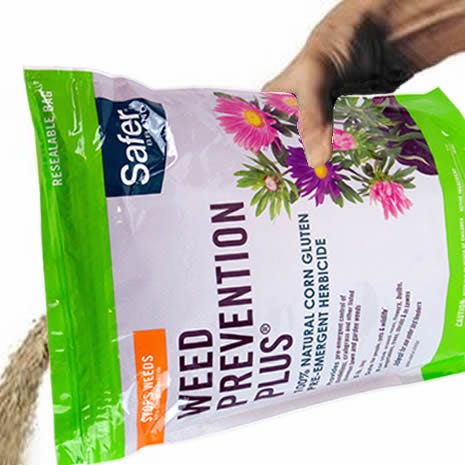
- Homogenous pellet for uniform nutrient and herbicide distribution
- For use in flower gardens, vegetable gardens and in landscaped areas around trees, shrubs and ornamentals
- Easy-to-use re-sealable bag
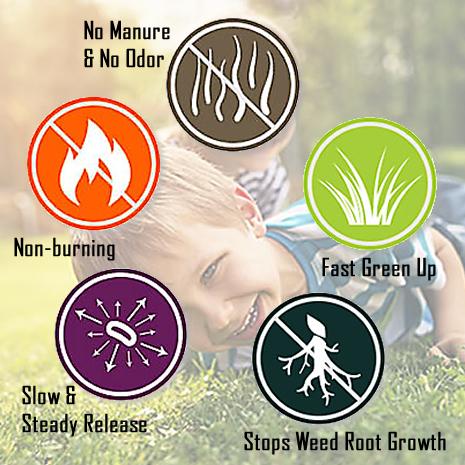
- Safe for use around children and pets when used as directed
- Available in 1 pack or 3 pack
Best Used For





Safer® Brand Weed Prevention Plus® – 5 lb
Stop weeds and dandelions in their tracks before they start to take over your lawn and garden with Safer® Brand Weed Prevention Plus®! This product boasts up to 90% effective weed control in the first year and can be used in flower gardens, vegetable gardens, and in landscaped areas around trees, shrubs and ornamentals. It’s even safe for kids and pets immediately after application when used as directed.
How it Works
The Safer® Brand Weed Prevention Plus® harnesses the power of corn gluten meal (100%), creating a natural but powerful weed prevention fertilizer. Corn gluten is a by-product on the cornstarch manufacturing process and it naturally possesses the ability to prevent weeds from taking root and maturing. The corn meal is combined with a natural fertilizer in the Weed Prevention Plus formula to provide your lawn with a boost of nutrients for fast lawn improvement.
Stops Weeds in Their Tracks
Winning the battle against weeds for the lawn of your dreams is all about timing and temperature. For the best results, apply Safer® Brand Weed Prevention Plus® in early spring to attack weeds before they have a chance to sprout and spread.
It’s important to apply weed prevention while weed seeds are still germinating underground to be as effective as possible. Once applied, the weed prevention keeps weeds’ seeds from germinating and growing into a full blown lawn care issue.


Natural Nutrient Boosters For Healthier Lawns
Safer® Brand Weed Prevention Plus® not only prevents weeds but also fertilizes your lawn to help you achieve a lusciously green lawn. Unlike chemical fertilizers that strip soil of nutrients, Weed Prevention Plus® provides a slow but steady stream of nutrients to nourish the soil and promotes the long-term health of your lawn.
With each bag of Weed Prevention Plus®, you can rest assured that your lawn is receiving a balance of the essential nutrients needed to grow and thrive. The Safer® Brand Weed Prevention Plus® contains 80% nitrogen, 20% phosphorus, and 40% potassium. Nitrogen promotes leaf growth; phosphorus supports flower/fruit development, and potassium helps root development and overall health.
How to Apply
Check your local weather conditions before applying Safer® Brand Weed Prevention Plus®. For best results, you want several rain-free days following its application to your lawn. Spread the weed prevention evenly throughout the desired areas and thoroughly water the area. The water will ensure the corn gluten meal is absorbed into the ground. Allow the ground to dry out over the following few days, and as the weeds attempt to sprout, their roots will die and the weed will not be able to develop.
This product is a great addition to any garden and will help blooming and growth! The weed prevention will not change the pH of your soil or harm any established plants, so feel free to spread it far and wide across your garden! If you are trying to grow new grass on your lawn, wait at least six weeks after your application of Safer® Brand Weed Prevention Plus®. The product is so effective at stopping seed germination that it might thwart your attempts to grow new grass seed.
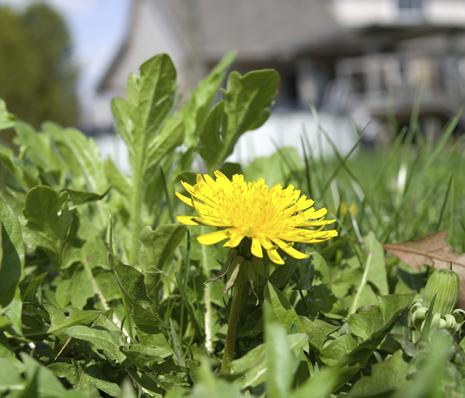
Not For Use on Existing Weeds
Safer® Brand Weed Prevention Plus® stops weeds before they get a chance to establish themselves and become a massive pest. Unfortunately, corn meal cannot be used to kill existing weeds. The corn meal formula works well to prevent seed germination and growth, however, it is ineffective at suppressing the weed’s root growth. By applying corn meal to existing weeds, you will actually be feeding them and helping them grow!
Safer® Brand Weed Prevention Plus® – 5 lb Product Details
Do you want to know more helpful details about Safer® Brand Weed Prevention Plus®? Take a closer look at the in-depth specifications for this product.
| Safer® Brand Weed Prevention Plus® – 5 lb | |
|---|---|
| Model # | C97181 |
| Size | 5 lb |
| Available Sizes | 1 bag or 3 bags |
| Ingredients | 100% Corn Gluten Meal |
| Product Form | Homogenous pellets |
| Best Used On |
|
| Effective Against a Wide Variety of Weeds | Annual Bluegrass, Barnyard grass, Black Medic, Black Nightshade, Buckhorn Plantain, Catchweed Bedstraw, Clover, Crabgrass, Creeping Bentgrass, Curly Dock, Dandelions, Green & Giant Foxtails, Lambsquarter, Orchard grass, Purslane, Quackgrass, Redrood Pigweed, Shattercane, Velvetleaf, Wooly Cupgrass |
| Safer® Brand Weed Prevention Plus® | |
|---|---|
| Model #: | C97181 |
| Size: | 5 lb |
| Available Sizes | 1 pack or 3 pack |
| Ingredients: | 100% Corn Gluten Meal |
| Product Form: | Homogenous pellets |
| Best Used On: |
|
| Features: |
|
| Effective Against a Wide Variety of Weeds: |
|



About Safer® Brand
Safer® Brand is the leader in alternative lawn and garden products, offering many solutions that are compliant with organic gardening standards. Safer® Brand recognizes this growing demand by consumers and offers a wide variety of products for lawns, gardens, landscapes, flowers, houseplants, insects and more!
About Safer® Brand »