

Solutions compliant for organic gardening do exist to deal with insect pests, and they do so without the use of synthetic chemicals. Using such compliant pesticides when gardening organic is ideal for the consumer who wants a beautiful lawn and garden without the potentially harmful side effects that synthetic chemicals can cause.
Insecticidal Soaps for Organic Gardening
Insecticidal soap is much different than detergent! While detergent is derived from petroleum by-products, soap is a product of combining oleic acid (plants, for example) with potassium hydroxide. The resulting chemical reaction makes an insecticidal soap like the ancient Greeks or the earlier pioneers used. Using an insecticidal soap is mandatory when you are gardening organic to keep your garden pest-free.
Bugs and plants contain a waxy, fatty outer layer that protects them from attacks and helps to retain moisture, similar to the effect of human skin. This is key to understanding how insecticidal soap works as an insecticide or herbicide.
Insecticidal Soaps are powerful natural solvents that quickly dissolve fat-based substances. The soap removes the plant or insect's protective coating causing them to dry out – quickly! It is highly effective on soft-bodied insects such as aphid control and mealybug control. As an herbicide, when applied in the heat of the day, wilting starts to occur in hours. Repeated applications will starve the root, killing the plant.
Pest Control Methods
Traps
Traps attract insects and contain them in a device from which they cannot escape. This can be a sticky surface such as a fly ribbon or glue trap. The trap may also be a bottle or bag that the insect enters and is usually drowned in the water inside the trap.
Attracting the insect to the trap is usually a function of baiting it with food or pheromones. Pheromones are the chemical compounds insects use to communicate. These pheromones mimic feeding, mating and aggregation behaviors of the target insect. Click here to view a full list of our insect control solutions.
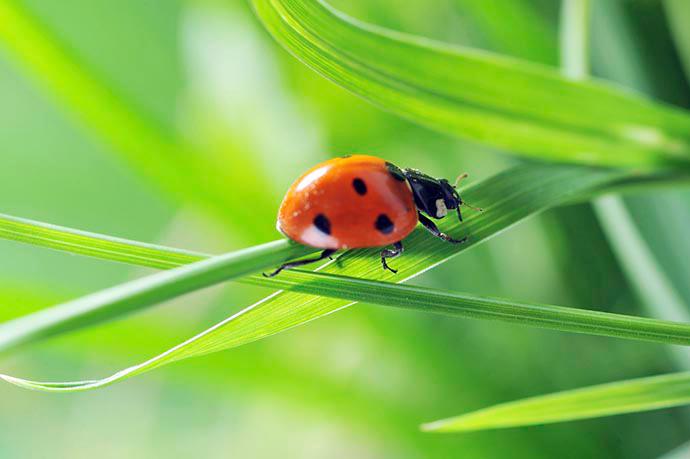
Beneficial Bugs
Another strategy organic gardeners can employ is releasing or attracting beneficial insects to your garden. There are numerous beneficial insects, the most common are ladybugs, lacewings, predatory mites, and the praying mantis.
Biologicals
Biologicals are made up of fermented proteins. These are Bacillus and Spinosa type compounds. These are very specific acting ingredients. The strain of bacillus needs to be matched to the family of insect targeted. Many times, they are gut poisons that shut down the insect's desire to feed, thereby causing starvation.
Diatomaceous Earth
Diatomaceous Earth or better known as DE and is a fossilized diatom powder. Under a microscope, these fossils look like shards of glass. As an insect crawls across this powder, its exoskeleton is cut or abraded, which causes moisture loss and dehydration. It is typically classified as a desiccant.
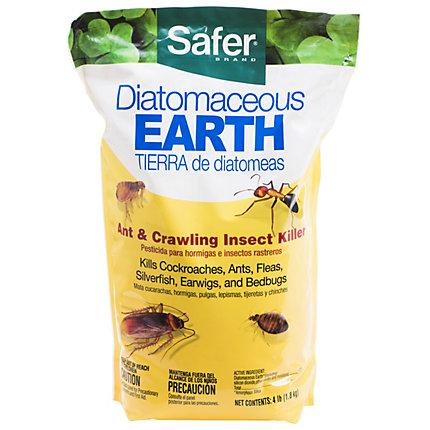
With the recent outbreak of Bed Bugs in North America, DE has come to the forefront as the 'preferred method' for elimination. Safer® Brand Ant & Crawling Insect Killer uses DE to rid your house of Bed Bugs and other crawling insects.
EPA Directive on Food-Grade Diatomaceous Earth: “When using desiccants (diatomaceous earth or boric acid) to control bed bugs it is critical to use those that are registered by EPA and labeled for bed bug control. Desiccants that are intended for other uses, such as food-grade or for use in swimming pools, pose an increased inhalation risk to people.” Click here for more info on pesticides that control bed bugs.
Pyrethrins & Oils
Nature’s strategy to control pests that damage fruits, vegetables, and flowers involves complexes that are found inside the plant. Pyrethrins, orange oil, and neem oil, all have repellent and insecticidal properties extracted from specific types of plants. Products such as Safer® Brand EndALL® use Pyrethrins and essential oils to eliminate 45 different types of insects.
Pyrethrins are extracted from a specific type of daisy, named the Chrysanthemum flower. In the plant, it repels insects and protects the flower from predators. When collected and concentrated, pyrethrin is a very effective insecticide that affects the insect’s nervous system. This compound breaks down quickly in the environment and has no residual health or environmental impact. Products, such as Safer® Brand Insecticidal Soap & Pyrethrin Concentrate, use the power of pyrethrin to protect your yard and garden by killing insects on contact.
But don't be confused ... not all pyrethrin is organic!! Pyrethrin is natural but very unstable. It is usually preserved in petroleum distillates, which often disqualifies them from being organic. Organic pyrethrin, which is used in Safer® Brand products such as EndALL® and Insecticidal Soap & Pyrethrin Concentrate contains NO petroleum distillates, which helps it earn compliance with organic gardening standards.
Neem Oil
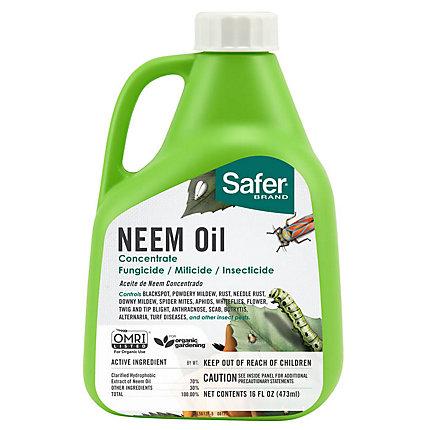
Neem oil is extracted from the neem tree. It is a fixed oil, however, it carries an insect growth regulator (IGR) containing strong insecticidal properties in its unrefined state. This IGR is azadirachtin, often separated from the neem oil and concentrated as an active ingredient unto its own.
The resulting refined neem oil with the IGR removed is primarily used to suffocate insects and plant diseases. Safer® Brand Neem Oil uses this powerful oil to protect your garden from insects and plant diseases.
Essential Oils
Essential Oils are fragrant oils that plants produce, such as orange oil, clove oil, thyme oil, cedar oil, etc. The molecules are very energetic and will affect the insects’ nervous system. These oils are strong natural solvents that will break down the insects waxy protective coating.
Fixed Oils
Fixed Oils are the less aromatic oils derived from plants such as corn oil, canola oil, soybean oil, etc. These oils generally work by clogging the respiratory openings of the insect, causing suffocation. These are also effective against several plant diseases.
 Safer® Brand leads the alternative lawn and garden products industry, offering many solutions that are compliant with organic gardening standards. Safer® Brand recognizes this growing demand by consumers and offers a wide variety of products for lawns, gardens, landscapes, flowers, houseplants, insects and more!